
Enterprise AI
Responsible AI, Built for Production
AI only earns a place in production once someone can own it. We start with governance, oversight, and a clear read on risk, then build toward capability the business can actually run. Advisory sets the guardrails. Delivered, accountable AI is where we finish.
What We Are Known For
Two Things, and We Hold Ourselves to Both
We Do Responsible AI
That means specific engineering decisions on every engagement: what stays deterministic, how we define accuracy for each task, what controls the risk requires, how people adopt the system without over-trusting it, and who owns it once it ships.
We Stay Ahead of the Market
We were in the room at the first Chief AI Officer Summit. We built our own AI products before most firms called this enterprise AI. We also host an executive AI forum, now in its fourth year, where senior operating leaders tell us what they need before it reaches the market. That shapes what we build next.
Our practice is built around the reasons why. See the six decisions below.
Early to Everything
How We Got Ahead, and How We Stay There
We built the talent and delivery foundation first, then data, then cloud and security, then enterprise solutions. Enterprise AI sits on top of all four. Most AI firms start at the top with nothing underneath.
2018
Founded in Maryland
Talent and delivery first, the layer everything else needed.
Built In-House
Our Own AI Products
An in-house AI recruiting platform, built and run by our own team. Still in production today.
2023
First Chief AI Officer Summit
Occams attended the inaugural summit, early in a market that barely had the term yet.
4th Year
The Executive Evening
Our invitation-only forum for CIOs, CISOs, and operating leaders. We hear what the market needs before it asks for it.
2024-26
Enterprise AI in Production
Implementations that get past the pilot stage, in financial services, healthcare, and professional services.
2026
Framework 2.0
The method, published: ten questions, seven stages, accuracy defined per task.
How We Think About AI
Responsible AI Comes Down to Six Engineering Decisions
Outcome First
A measurable result, in a defined time frame, against a baseline. We never start from a technology looking for a home.
The Razor
We design every solution as if AI did not exist, then add AI only where it earns its place. The model narrates; the database answers. Every exact number comes from code, never from a model's guess.
Accuracy Is Engineering
Never one universal number. Defined for your specific task, tested against a baseline, with thresholds set by consequence and measured continuously after go-live.
Controls Beyond a Human in the Loop
Reviewers habituate, so we design against automation bias: escalation, blind review, approval monitoring. Logs are audit-ready by architecture, and quality is actually audited as a service.
Adoption Is Planned Before We Build
AI changes how people work, including the people who will trust it too much. We plan for that before we build, and we check adoption with a 90-day pulse.
Production Is the Product
Deployment, hypercare, ongoing operation, and a continuous cycle of improvement follow every demo we build, under our ownership the whole way.
The Lifecycle
The Seven Stages That Loop
Stage four is where we differ. The production path, including accuracy, controls, adoption, and support, is presented with the prototype, so you decide with full information. Then the cycle loops. Most vendors stop at stage three.
Current work spans every stage, from outcome validation to full production support. Four of these engagements are detailed in Proof in Practice below.
Stage 04 · Where We Differ
myCGO, Our Growth Intelligence Platform
Signal-driven account intelligence with a verifiable source behind every signal. Production path defined: accuracy per task, review before any action, run cost modeled. Build underway.
We never present a prototype as a production result.
Before We Propose Anything
Ten Questions Every Enterprise Has to Answer Before AI Goes to Production
If these ten cannot be answered in writing, the solution is not ready, and neither is the organization. We answer them before we propose anything. Here are the first three.
Question 01
What outcome, in what time frame, against what baseline?
Question 03
What would the fix look like if AI did not exist?
Question 06
What is the business impact of a wrong output?
Seven More, and They Decide Whether It Survives Month Six
Who owns the process and whose daily work changes. Which exact component needs AI, and why. What data, permissions, and security it requires. How impact is tested. What review and audit the risk demands. How people adopt it without over-trusting it. Who owns it after launch. Ask for the full ten and we will send them with the framework that answers them.
Send Me All Ten QuestionsHow We Talk About Value
Four Honest Categories
Cash and staffing visibility for a global professional services firm, through AI-enabled forecasting.
Read the full case studyOur honesty rule: recovered time counts as an Improve. A Reduce only counts when an expense is actually removed or avoided, and every business case has to survive your CFO.
Enterprise-Grade Security, Whatever Your Size
Built for the Industries That Get Audited
We work in healthcare, financial services, legal, and the public sector, where a wrong answer has a regulator attached to it. Every system we deploy is built to that standard, and we size the rigor to the risk, never the reverse.
Your Tenant, Your Boundary
AI Security, by Architecture
Controls That Survive an Audit
Where We Hold the Line
- HIPAA-aware architecture and PHI boundaries in healthcare
- Model explainability and decision audit trails in lending and finance
- Privileged-content handling and matter-level access in legal operations
- Public-sector data sovereignty and accessibility standards
- Secure development with scanning in the IDE, at commit, and in the pipeline
Your compliance and security teams join discovery from day one. We only claim certifications we actually hold.
What We Promise
“Most firms will help you build AI. We make sure you can prove it worked.”
“We design every solution as if AI didn't exist, then add AI only where it earns its place.”
“We will tell a client no when AI is not the right tool for the job.”
What We Will Not Do
- Use AI where ordinary software is more reliable
- Quote a universal accuracy percentage
- Present a prototype as enterprise readiness
- Deploy without controls, an adoption plan, and a support model
- Describe our track record in aggregates; every reference is individual
- Call recovered staff time a cost saving unless spending is actually removed
Proof in Practice
Engagements, Described Individually
The focus stays on the operating question, the intervention, and the measurable shift in capability. Client names only with written permission.

AI Solutions
Consulting Firm Improves Forecasting Speed and Leadership Visibility with AI-Enabled Planning
Challenge
Finance and workforce forecasting relied on spreadsheets and external advisors, limiting speed, consistency, and executive visibility into changing conditions.
Solution
Occams led discovery with AI architects and domain experts, unified finance, CRM, HR, and staffing signals, and designed AI-enabled workflows for both cash and talent forecasting.
Outcome
Forecasting cycles improved significantly, reliance on outside advisors fell, leaders gained better visibility into staffing and cash positions, and the organization created a stronger base for ongoing AI adoption.

AI & Data Engineering
Consumer Lender Modernizes Data and Model Operations for AI-Led Decisioning
Challenge
Legacy on-prem systems, manual model scoring, fragmented MLOps workflows, and rising pressure to prepare for Gen-AI made the operating model hard to scale.
Solution
Occams helped structure a cloud migration, automated model operations (MLOps), enabled secure data exchange, and defined a cloud-native architecture that could support future AI use cases.
Outcome
The program created a scalable data foundation, more stable ML pipelines, stronger cross-team alignment, and a clearer roadmap for AI-supported innovation.
Outcome and Baseline
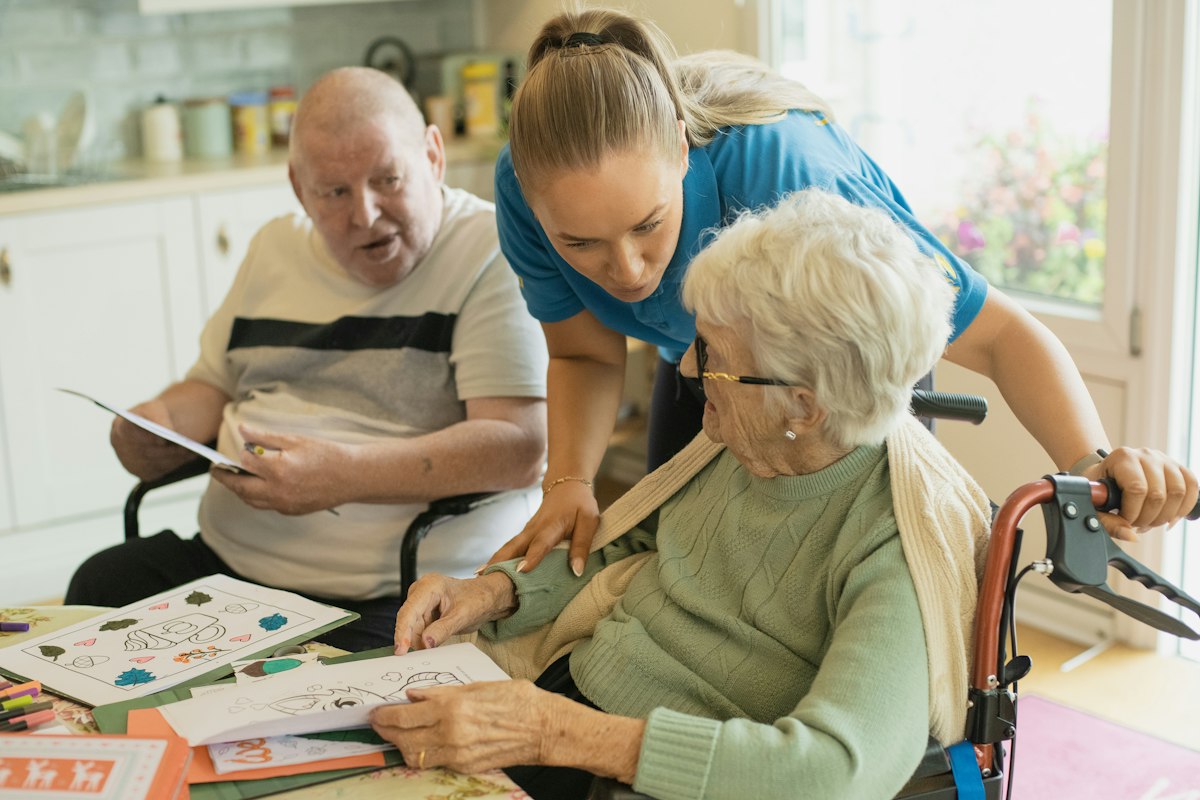
A National Senior Living Operator Starts with the Data, Not the Model
Challenge
Occams already runs this operator's managed network and security operations. Leadership wanted to explore AI across the business, but no outcome or baseline existed yet for any specific use case.
Solution
Occams began the only way it starts an AI engagement: defining the first measurable outcome and baselining the operating data underneath it, before any model was proposed.
Outcome
The organization now has a validated outcome and a clean data baseline to build from, and a sequenced view of where a model would and would not help.

Contained Prototype
A Multi-State Physician Network Prototypes Deterministic Referral Matching
Challenge
A physician network spanning many states needed specialty demand matched to credentialed provider capacity by geography, so referrals stayed in network instead of leaking out.
Solution
Occams built a contained prototype on real data: deterministic matching logic handles the assignment, with a model used only for the demand forecast feeding it.
Outcome
The prototype is running against real referral and capacity data, with its production path, accuracy target, and review requirements defined alongside it before any rollout decision.
Perspective
Why Businesses Should Adapt to AI
Kenny Lew, Occams' Chief Transformation Officer, on where AI creates real value and why the time for leaders to act is now.
Common Questions
What Leaders Ask About Enterprise AI
Ready When You Are
Where Are You on the Path
Six questions, two minutes. You get your stage, the one question to answer next, and the right way to start with us. No sales call required.
Question 1 of 6 · Outcome
Is there a measurable outcome, with a baseline, for the AI use case you have in mind?
Ready When You Are
Bring Us One Problem Worth Solving
We will bring a working demo, and everything around it that makes it real.